Space Quiz: The Complete Stargazer's Guide

Introduction
Few subjects feed trivia quizzes as reliably as space. The solar system gives quiz writers a perfect cast of characters — eight planets with distinct personalities, a demoted ninth that everyone argues about, moons with oceans hidden under ice — and human spaceflight supplies the drama: firsts, records, rescues and rivalries played out above the atmosphere.
Space editions appear whenever a homepage photograph shows a nebula, a rocket launch, an eclipse or a full moon, and the questions follow predictable orbits: planet order and superlatives, famous firsts, mission names and the astronauts behind them. This guide gathers everything into one place, so the next cosmic edition feels like a home game.
This guide is one part of the wider Bing quiz universe — see how every format fits together in our complete Bing Quiz guide.
What Is the Space Quiz?
A Space quiz is a science-themed trivia edition covering astronomy and space exploration: the planets and dwarf planets of our solar system, the Sun and Moon, stars and galaxies, and the human adventure of getting off the ground — rockets, space stations, and the people who flew them. Questions range from schoolbook basics (which planet is red?) to delightful oddities (which planet rains diamonds?).
Three knowledge zones cover nearly every question asked. First, the solar-system superlatives: biggest, hottest, fastest, closest. Second, the exploration timeline: Sputnik, Gagarin, Apollo 11, the shuttles, the ISS, and the new private era. Third, the vocabulary: terms like light-year, orbit, eclipse and gravity that questions love to test sideways.
What Is the History of the Space Quiz?
Humans have read the sky for as long as records exist — Babylonian star catalogs, Mayan Venus tables, and Stonehenge's solstice alignments all predate writing about anything else. The telescope changed everything in 1609, when Galileo saw Jupiter's moons and proved not everything circles Earth. Newton then explained the clockwork, and for three centuries astronomy was a science of looking.
The twentieth century made it a science of going. Konstantin Tsiolkovsky and Robert Goddard worked out rocketry's mathematics, and the Cold War turned theory into race: Sputnik beeped over a stunned world in 1957, Yuri Gagarin orbited in 1961, and Apollo 11 landed Armstrong and Aldrin on the Moon in 1969. Twelve people have walked on the Moon, all between 1969 and 1972.
The modern era is about staying and seeing. The International Space Station has hosted rotating crews continuously since November 2000. Hubble rewrote astronomy from orbit after 1990, and the James Webb Space Telescope, launched in 2021, now images the first galaxies. Meanwhile private companies land rockets upright, and new missions target the Moon and Mars — fresh material for every future space quiz.
| Year | Milestone |
|---|---|
| 1609 | Galileo turns a telescope to the sky and discovers Jupiter's four large moons. |
| 1957 | Sputnik 1, the first artificial satellite, begins the space age. |
| 1961 | Yuri Gagarin becomes the first human in space aboard Vostok 1. |
| 1965 | Alexei Leonov performs the first spacewalk. |
| 1969 | Apollo 11: Neil Armstrong and Buzz Aldrin walk on the Moon. |
| 1981 | The first Space Shuttle launches, beginning the reusable era. |
| 1990 | Hubble Space Telescope deployed; its deep-field images later rewrite cosmology. |
| 2000 | Continuous human occupation of the International Space Station begins. |
| 2021 | James Webb Space Telescope launches, seeing the universe's first light. |
How Does the Space Quiz Work?
Space editions follow the familiar multiple-choice format with instant feedback, and their questions cluster into reliable zones. Expect one question on planet order or a planetary superlative, one on a famous first (satellite, human, Moon landing), one on the Moon or eclipses, and one wildcard from the telescope or exploration era. The photograph matters: a homepage eclipse image almost guarantees an eclipse question.
Preparation is compact and high-yield. Learn the eight planets in order with one vivid fact each, memorize the five canonical firsts with their years, and skim the records table below. That small syllabus answers the large majority of space questions asked anywhere, and the practice quiz below tests exactly those zones.
Can You Beat Our Space Quiz Practice Quiz?
Ready? Ten questions, instant feedback, full explanations — exactly the style of the real thing. No sign-up, no timer.
How Is the Space Quiz Scored?
Scoring is instant, one point per question, with an explanation after every answer. Space quizzes reward syllabus discipline: players who know the planet order, the five big firsts and the records table reliably score 8/10 or better. The questions that separate 8 from 10 are the vocabulary ones — light-year, eclipse, gravity — so read the definitions section twice.
Interesting Facts
- Jupiter's Great Red Spot is a storm wider than Earth that has raged for centuries.
- A day on Venus lasts longer than its year — it rotates slower than it orbits the Sun.
- Footprints on the Moon may last millions of years, since there is no wind or water to erase them.
- Saturn is so light it would float in a bathtub big enough to hold it.
- More people have flown to space (600+) than have walked on the Moon (12).
- The Sun contains about 99.8 percent of all the mass in the solar system.
- Neptune's winds exceed 2,000 km/h — the fastest in the solar system.
- Space is not silent by emptiness alone: sound needs a medium, and vacuum has none.
- Olympus Mons on Mars is about two and a half times the height of Mount Everest.
- The Hubble Deep Field found thousands of galaxies in a patch of sky the size of a grain of sand held at arm's length.
Statistics & Key Data
| Record | Holder | Figure |
|---|---|---|
| Largest planet | Jupiter | ~11 Earth diameters |
| Hottest planet | Venus | ~465 °C surface |
| Fastest winds | Neptune | >2,000 km/h |
| Tallest volcano | Olympus Mons (Mars) | ~22 km |
| Largest moon | Ganymede (Jupiter) | Bigger than Mercury |
Comparison
| Planet | Day length | Moons | Signature fact |
|---|---|---|---|
| Mercury | 59 Earth days | 0 | Biggest day-night temperature swings |
| Venus | 243 Earth days | 0 | Hottest planet, spins backwards |
| Earth | 24 hours | 1 | Only known world with life |
| Mars | 24.6 hours | 2 | Home of Olympus Mons |
What Are the Pros and Cons of the Space Quiz?
Advantages
- Compact core syllabus — a dozen facts answer most questions
- Spectacular imagery makes the facts easy to remember
- Records and firsts are stable; knowledge rarely goes stale
- Constant news flow (launches, eclipses) keeps the theme fresh
- Great gateway subject for younger players
Disadvantages
- Numbers-heavy — distances and years blur together without anchors
- Some favorites (Pluto!) attract trick questions
- The exploration timeline confuses players who skip dates
- Deep-space vocabulary can feel abstract on first meeting
How Can You Score Higher on the Space Quiz?
- Memorize planet order with a sentence — My Very Excellent Mother Just Served Us Noodles — and attach one superlative to each planet.
- Learn the five firsts as a dated chain: Sputnik 1957, Gagarin 1961, Leonov 1965, Apollo 11 1969, ISS crew 2000.
- When the homepage photo shows the Moon, review eclipse mechanics and Apollo trivia before playing.
- Distinguish diameter, distance and temperature superlatives — quiz writers love swapping them.
- Read explanations even when correct; the extra nugget is often tomorrow's question.
What Mistakes Should You Avoid in the Space Quiz?
- Placing Mercury as the hottest planet — proximity is not temperature; Venus wins on atmosphere.
- Confusing the first person in space (Gagarin) with the first on the Moon (Armstrong).
- Assuming Pluto is still quiz-answer 'ninth planet' — it was reclassified as a dwarf planet in 2006.
- Mixing up galaxy, solar system and universe scales.
- Guessing years at random instead of anchoring to the 1957–1969 chain.
Deep Dive
Why Planet Order Is the Skeleton Key of Space Trivia
Every space quiz, at some level, is built on the solar system's map. Mercury-Venus-Earth-Mars-Jupiter-Saturn-Uranus-Neptune is not just a list; it is a sorting device that answers entire families of questions. Which planet is closest to the Sun? First in line. Which are the gas giants? The four outer heavyweights. Which have no moons? The two innermost. Learn the order and half the map questions solve themselves.
The memory hook that has carried generations of schoolchildren — My Very Excellent Mother Just Served Us Noodles — works because it converts an arbitrary sequence into language, and language is what memory is for. Add one superlative per planet as a second hook: Mercury is fastest, Venus hottest, Earth alive, Mars red, Jupiter biggest, Saturn ringed, Uranus sideways, Neptune windiest. Two sentences, and the solar system is yours.
The Space Race: How a Rivalry Put Humans on the Moon
The Apollo program makes little sense without its context: a technological duel between the United States and the Soviet Union, fought with rockets instead of armies. Every Soviet first — the satellite, the human, the spacewalk — demanded an American answer, and the answers grew until they reached the Moon. The quiz questions about 1957 to 1969 are really questions about that rivalry.
What often surprises players is how fast it all was. Twelve years separated Sputnik's beep from Armstrong's footprint. Then, almost as quickly, it ended: budgets collapsed, priorities shifted, and no human has left low Earth orbit since 1972. Knowing that arc — sprint, triumph, long pause, and today's renewal — gives every Moon question a story to hang on.
Moons, Rings and Other Quiz-Favorite Oddballs
After planets, moons are the quiz world's favorite supporting cast. Jupiter's Ganymede is the largest, bigger than Mercury. Saturn's Titan has lakes of liquid methane. Jupiter's Europa hides a global ocean under its ice, and Saturn's Enceladus sprays that kind of ocean into space through geysers. Each is a ready-made question, and each rewards one vivid image.
Rings are the other favorite. Saturn's are the famous ones, but Jupiter, Uranus and Neptune have rings too — fainter, darker, discovered late. Quiz writers enjoy the asymmetry: everyone knows Saturn has rings; knowing the others have them too is the difference between a good score and a perfect one.
Telescopes That Rewrote the Universe
Two orbiting observatories anchor modern space trivia. The Hubble Space Telescope, launched in 1990, overcame an early mirror flaw to become perhaps the most productive scientific instrument ever built — its deep fields revealed thousands of galaxies in apparently empty sky, and its measurements pinned down the universe's expansion rate. The James Webb Space Telescope, launched in 2021, looks deeper still, in infrared, capturing light from the first galaxies to form after the Big Bang.
For quiz purposes the contrast is the lesson: Hubble sees mainly visible and ultraviolet light; Webb sees infrared, which is why it can peer through dust and further back in time. Remember the pairing — 1990 Hubble, 2021 Webb — and you own the observatory questions for the next decade.
How to Keep Your Space Knowledge Current
Unlike most trivia subjects, space keeps writing new chapters: lunar landers, Mars helicopters, new crewed programs, and annual events like eclipses and meteor showers that homepage photographs love. The efficient habit is light-touch: when a launch or eclipse makes the news, read one explainer. Those moments are precisely when space quizzes appear, and fresh context converts directly into points.
The stable core — planet order, the firsts, the records — changes so slowly that one good study session lasts for years. Invest once in the core, refresh lightly with the news, and space becomes the easiest theme on your quiz card.
Preparing for Space Editions
Space editions reward a layered study plan. Start with the solar system's skeleton — eight planets in order, one asteroid belt, and the dwarf planet Pluto as the eternal trick answer. Then add the human layer: Gagarin first in space (1961), Armstrong first on the Moon (1969), and the ISS as the permanent outpost. Finish with the record book: Jupiter biggest, Mercury fastest, Venus hottest.
Timing helps too. Space quizzes cluster around anniversaries — the Moon landing each July, Yuri's Night each April — and around launches that make the homepage. A quick scan of recent mission news before those windows covers the modern questions, while the historical canon stays valid forever. Few subjects offer a better ratio of study time to permanent knowledge.
Space Firsts Worth Memorizing
The firsts list is the beating heart of space trivia: first satellite (Sputnik 1, 1957), first animal in orbit (Laika, 1957), first human (Yuri Gagarin, 1961), first woman (Valentina Tereshkova, 1963), first spacewalk (Alexei Leonov, 1965), first Moon landing (Apollo 11, 1969). Each pairs a name with a year, which is exactly how multiple-choice questions are built.
The modern firsts matter as well: first private crew to orbit (Inspiration4, 2021), first reusable orbital rocket booster landed (Falcon 9, 2015), first samples returned from an asteroid by Japan's Hayabusa probes. Quizzes increasingly blend the Apollo canon with the commercial era, so both timelines deserve a place in memory.
From the Quiz to the Night Sky
The best way to make space facts stick is to see them. Jupiter and Saturn are naked-eye objects most of the year; Venus outshines everything but the Moon; a cheap pair of binoculars reveals Jupiter's four Galilean moons — the same four that appear in quiz questions. Looking up converts abstract answers into personal experience.
Meteor showers make the connection even easier: the Perseids every August and Geminids every December arrive on schedule like quiz editions. Players who have watched the ISS glide overhead or spotted the Orion Nebula rarely miss astronomy questions again — the sky itself becomes the revision sheet.
How many planets are in our solar system?
Eight, since Pluto's reclassification as a dwarf planet in 2006: Mercury, Venus, Earth, Mars, Jupiter, Saturn, Uranus and Neptune, in order from the Sun.
Who was the first person in space?
Yuri Gagarin, a Soviet cosmonaut who completed one orbit of Earth aboard Vostok 1 on 12 April 1961 — a flight of 108 minutes that made him world-famous overnight.
How many people have walked on the Moon?
Twelve, all American astronauts on Apollo missions 11 through 17 between 1969 and 1972. Neil Armstrong and Buzz Aldrin were the first; Eugene Cernan was, so far, the last.
What is the biggest planet?
Jupiter — about 11 Earth diameters across and more massive than all the other planets combined. Its Great Red Spot is a storm larger than Earth.
What is a light-year?
A unit of distance, not time: how far light travels in one year, about 9.46 trillion kilometers. The nearest star system, Alpha Centauri, is about 4.37 light-years away.
Why does the Moon have phases?
Phases are the changing sunlit fraction we see as the Moon orbits Earth. The cycle from new Moon to full Moon and back takes about 29.5 days — a lunar month.
What is the ISS?
The International Space Station: a football-field-sized laboratory orbiting about 400 km up, continuously crewed since November 2000 by rotating international expeditions.
Related Reading
- Bioluminescence Quiz: The Complete Guide to Living Light — more science & discovery: bioluminescence quiz
- World's Fastest Quiz: Every Speed Record That Matters — more science & discovery: world's fastest quiz
- Bing DNA Facts Quiz: The Complete Genetics Guide — more science & discovery: bing dna facts quiz
- Sepsis Quiz: The Complete Awareness Guide — more science & discovery: sepsis quiz
- Snow Quiz: The Complete Winter Science Guide — more science & discovery: snow quiz
- Mission Impossible Quiz: Accept the Challenge — more science & discovery: mission impossible quiz
- World Bridges Quiz: The Complete Guide to Great Spans — more science & discovery: world bridges quiz
- Spider-Man Saga Quiz: Six Decades of the Web-Slinger — more science & discovery: spider-man saga quiz
People Also Read
- Father's Day Quiz: Origins, Dates and Traditions Worldwide — History & Culture: Play the Father's Day Quiz: the holiday's surprising origins, global d…
- Super Bowl Quiz: The Complete Championships and Records Guide — Sports: Test yourself with the Super Bowl Quiz: championships, dynasties, MVP …
- Bing Recycling Quiz: The Complete Sorting and Sustainability Guide — Nature & Wildlife: Play the Bing Recycling Quiz: resin codes, sorting rules, what can and…
- Bing World Cities Quiz: Capitals, Megacities and Landmarks Guide — Geography & Travel: Take the Bing World Cities Quiz: capitals, megacities, famous landmark…
- Lion Quiz: The Complete King of Beasts Guide — Nature & Wildlife: Roar through the Lion Quiz: pride life, hunting behavior, record sizes…
- Bing Ice Cream Quiz: The Complete Frozen Dessert Guide — Food & Drink: Scoop up the Bing Ice Cream Quiz: frozen dessert history, the top flav…
- Bing Homepage Quiz: The Complete Daily Guide — Core Bing Quiz: Master the Bing Homepage Quiz: how it works, when it refreshes, pro ti…
- Bing News Quiz: Your Weekly Current-Affairs Challenge — Core Bing Quiz: Ace the Bing News Quiz every week: how the current-affairs format work…
Explore Next
- Next in Science & Discovery: Bioluminescence Quiz: The Complete Guide to Living Light
- All Science & Discovery guides
- Editor's Picks — what players love right now
- Staff Picks — the reader favorites
- Latest Quizzes — fresh from the desk
- Quiz Glossary — the terms every player should know
In the Knowledge Graph
This guide connects to profiled entities — each with timelines, relationships and a knowledge panel:
Related Quizzes & Topics

World's Fastest Quiz: Every Speed Record That Matters
From the peregrine's dive to land-speed legends: master the World's Fastest quiz with every record category ex…
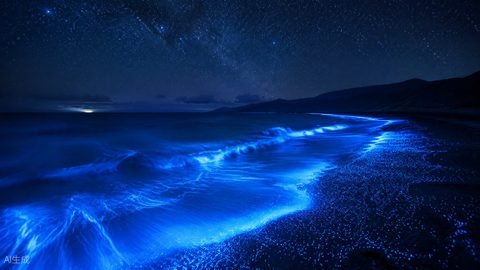
Bioluminescence Quiz: The Complete Guide to Living Light
Glow with our Bioluminescence quiz guide: fireflies, glowing seas, anglerfish and the chemistry of living ligh…

Bing Quiz: The Complete Guide to Every Format
Explore every Bing quiz format in one guide: homepage, news, weekly and themed quizzes — how each works, exper…
Summary
In short: A Space quiz tests knowledge of the solar system and beyond: the eight planets in order from the Sun, the largest planet (Jupiter), the first person in space (Yuri Gagarin, 1961) and on the Moon (Neil Armstrong, 1969), famous missions like Apollo 11 and the Hubble and James Webb telescopes, and record-holders such as Olympus Mons, the tallest volcano known. Most questions orbit a surprisingly small set of landmark facts. The essentials to remember are the key records and facts in the tables above — master those, play the practice quiz until it feels easy, and the next live edition of the space quiz will feel like revision.
References & Further Reading
- NASA — Solar System Exploration
- European Space Agency — Space in Your Daily Life
- NASA — Apollo 11 Mission Overview
- Space Telescope Science Institute — Webb Telescope